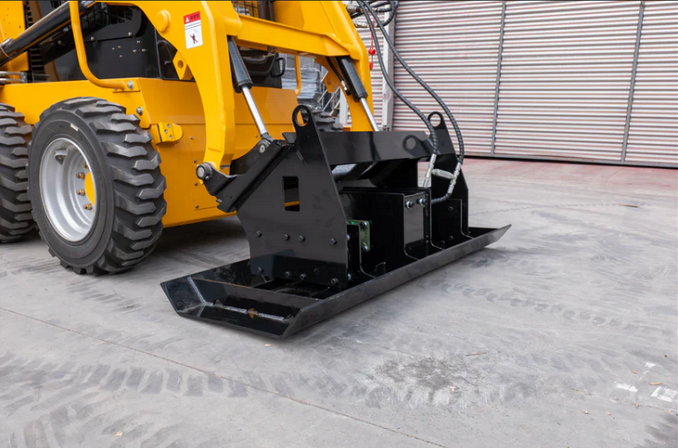
A skid steer with attachments can do far more than basic loading and hauling. With the right tools, one machine can handle land clearing, trenching, grading, mowing, snow removal, material handling, and site cleanup. That flexibility is exactly why skid steers are so popular with contractors, landscapers, farmers, and property owners.
The product collection you shared reflects that versatility well. MMS presents its skid steer loader attachment range for landscaping, construction, agriculture, and small projects, and lists 22 products including mulchers, grapples, trenchers, tillers, breakers, sweepers, snow tools, and concrete-mixing equipment. The page also highlights free shipping, a 1-year warranty, and lifetime technical support.
If you are planning to buy attachments, the smart approach is not to collect random tools. It is to build a working system around the jobs you do most often. In this guide, you will learn how skid steer attachments improve productivity, which attachment categories are worth considering, and how to choose tools that match your machine, workload, and budget.
Why a skid steer with attachments is a smart investment
The biggest advantage of a skid steer is versatility. Instead of buying several dedicated machines, operators can change tools and use one power unit for many different tasks. That means lower storage needs, simpler transport, and better equipment utilization throughout the year.
Manufacturers position skid steer loaders exactly this way. Bobcat describes attachments as a way to turn the loader into a highly versatile machine for tasks such as drilling holes, trenching, sweeping, grading, tilling, concrete work, snow clearing, and land clearing. Caterpillar similarly presents skid steer attachments for general construction, landscaping, agriculture, waste handling, and snow removal, with options like mulchers, trenchers, blades, forks, buckets, and backhoe-style digging tools.
From a business point of view, that flexibility creates several benefits:
- Higher return on one machine instead of multiple specialty units
- Faster project turnaround when the right tool is available on-site
- Less downtime between job phases because switching tasks is easier
- Better seasonal adaptability for mowing in warm months and snow work in winter
- Improved labor efficiency when one operator can do more with the same machine
For many buyers, the real value is not the machine alone. It is the machine plus the right attachment plan.
Most useful attachment categories for daily work
Choosing tools becomes easier when you group them by job type. Below are the attachment categories that usually deliver the most value.
1. Land clearing and vegetation management
If you work on overgrown lots, roadside areas, undeveloped property, or farm edges, vegetation tools often provide one of the fastest returns.
Popular examples include:
- Mulchers
- Brush cutters
- String trimmers
- Stump grinders
- Tree pullers
These tools help remove brush, small trees, roots, tall grass, and stumps. They are useful for site prep, trail maintenance, fence-line cleanup, and property improvement. The MMS collection includes several tools in this category, such as mulchers, stump grinding equipment, mowers, string trimmers, and a tree puller.
2. Digging and trenching
For drainage, utility lines, footings, and irrigation, digging tools make a skid steer much more productive.
Common options include:
- Trenchers
- Digging arms
- Backhoe-style attachments
- Augers
- Breakers or hydraulic hammers
Caterpillar lists augers and backhoe attachments for drilling, digging footings, drainage work, and trenching, while MMS includes a digging arm, trench attachment, and breaker-related tools in its range.
3. Grading and surface preparation
If your work involves driveways, pads, landscaping, or finish work, grading attachments can save major time.
Useful tools include:
- Land levelers
- Dozer blades
- Box blades
- Grader blades
- Compactors and rollers
These are ideal for smoothing, leveling, shaping, and compacting soil or aggregate surfaces. Caterpillar’s attachment lineup includes multiple blade and grading options, and MMS also offers land leveling and compaction-style tools.
4. Material handling
Material handling attachments are often overlooked, but they are essential for fast movement of bulky or irregular loads.
Examples include:
- Grapples
- Forks
- Buckets
- Bale handling tools
- Wood grapples
These attachments help with logs, brush piles, demolition debris, pallets, hay, and loose materials. Cat includes forks, grapples, and bucket types in its lineup, while MMS lists both grapple and wood grapple options.
5. Seasonal and specialty work
Some tools may not be used every day, but they can open new revenue streams.
Examples include:
- Snow plows
- Snow blowers
- Sweepers or brooms
- Concrete mixing buckets
- Log splitters
These are especially useful for contractors who want year-round utilization from one machine. The MMS collection includes snow tools, a sweeper broom, a concrete mixing bucket, and a hydraulic log splitter/wood processor.
How to choose the right attachment for skid steer jobs
The right buying decision starts with the job, not the catalog. A good attachment should solve a repeat problem, save labor, or create a new paid service.
Here is a practical way to decide.
Match the tool to your core work
Ask yourself:
- What jobs do I perform every week?
- Which tasks currently take too long?
- Where do labor costs rise the most?
- What service do customers ask for that I cannot yet offer?
If you mostly handle brush and overgrowth, a mulcher or brush cutter may be a better investment than a snow tool. If you do site prep and utility work, trenching and grading tools may deliver faster returns.
Check machine compatibility
Not every attachment works equally well on every skid steer. Before buying, confirm:
- Rated operating capacity
- Hydraulic flow requirements
- Connection or coupler compatibility
- Machine width and weight balance
- Required auxiliary hydraulics
- Operating environment
This step matters because an oversized or mismatched tool can reduce performance, strain the machine, and create safety issues.
Estimate return on use, not just purchase price
A lower sticker price is not always the best value. Think about:
- How often the tool will be used
- Labor hours saved per project
- Whether it helps you complete jobs faster
- Whether it opens higher-paying work
- Maintenance and wear-part costs
A premium tool that gets used twice a week may beat a cheaper option that sits in storage most of the year.
Consider operator skill level
Some attachments are easy for almost any trained operator to use. Others require more experience, judgment, and site awareness.
Generally easier to adopt:
- Brooms
- Grapples
- Levelers
- Snow pushers
- Basic buckets
Usually requiring more care and skill:
- Mulchers
- Breakers
- Trenchers
- Stump grinders
- Digging arms
Choosing the right tool also means choosing one your team can use efficiently and safely.
Best buying strategy for new and growing businesses
If you are building your fleet for the first time, do not try to buy every tool at once. A better strategy is to start with the attachments that cover the broadest range of profitable work.
A simple starter set often looks like this:
Phase 1: Core productivity tools
- Bucket or material-handling tool
- Grapple
- Grading or leveling attachment
Phase 2: Job-specific expansion
- Trencher for utility or drainage jobs
- Mower or mulcher for land clearing
- Compactor for surface prep
Phase 3: Seasonal or specialty tools
- Snow attachment
- Concrete mixer
- Log splitter
- Stump grinder
This phased approach protects cash flow while still increasing capability.
What makes an attachment worth buying
Before you place an order, evaluate the tool like an asset rather than an accessory.
Look for these qualities:
- Strong build quality
- Reliable hydraulic design
- Easy maintenance access
- Replaceable wear parts
- Good support and warranty coverage
- Clear compatibility information
- Practical fit for your regular workload
Support matters more than many buyers realize. The MMS page, for example, promotes warranty and technical support as part of its offer, which is important when attachments are used in demanding field conditions.
Common mistakes buyers should avoid
Even experienced operators can make poor attachment decisions. The most common mistakes include:
Buying for occasional jobs only
A specialty tool may look impressive, but if you use it twice a year, it may not justify the investment.
Ignoring hydraulic requirements
Hydraulic mismatch can lead to weak performance or machine stress.
Choosing based only on price
Cheap tools can cost more over time through downtime, repairs, and poor output.
Overlooking transport and storage
Large or heavy attachments need space, safe handling, and efficient jobsite logistics.
Failing to plan for maintenance
Wear parts, hoses, cutting edges, teeth, and bearings all affect long-term cost.
The best buying decisions usually come from discipline: choose the tools that fit real demand and deliver repeat use.
How attachments improve productivity on the jobsite
A well-equipped skid steer can transform work flow. Instead of waiting for a different machine, hauling in extra equipment, or outsourcing small phases of work, crews can switch tools and keep moving.
That improves productivity in several ways:
- Less machine idle time
- Fewer subcontracted tasks
- Faster response to changing site conditions
- Better use of operator time
- More billable services from one machine platform
This is why attachments are not just accessories. They are productivity multipliers.
Final thoughts
A skid steer with attachments is one of the most practical ways to increase versatility without building an oversized equipment fleet. Whether your work involves clearing land, digging trenches, grading sites, moving materials, or handling seasonal services, the right tools can turn one machine into a dependable multi-role asset.
The smartest path is to focus on your most common jobs, confirm machine compatibility, and invest in each attachment for skid steer work based on real return rather than impulse. Start with the attachments that solve repeat problems, then expand into specialty tools as your workload grows. When chosen carefully, the right setup can save time, reduce labor pressure, and create more earning opportunities year-round.
FAQ
1. What is the biggest benefit of using a skid steer with attachments?
The biggest benefit is versatility. One machine can handle multiple tasks such as clearing, digging, grading, lifting, and cleanup, which helps reduce equipment costs and improve overall jobsite efficiency.
2. How do I choose the best attachment for skid steer applications?
Start with your most common jobs. Then check hydraulic flow, machine size, coupler fit, operating conditions, and expected frequency of use. The best choice is the one that saves time on work you do regularly.
3. Which attachments are best for landscaping?
For landscaping, some of the most useful tools are mulchers, mowers, trenchers, levelers, grapples, sweepers, and stump grinders. The best option depends on whether your work focuses on cleanup, grading, planting prep, or vegetation control.
4. Are skid steer attachments good for seasonal work?
Yes. Snow plows, snow blowers, sweepers, and grading tools can help keep a machine productive in different seasons, which is valuable for contractors trying to maximize equipment use all year.
5. Should I buy one specialty tool or several basic tools first?
For most businesses, it is smarter to start with broadly useful tools first. A grapple, grading tool, or bucket often delivers more frequent value than a highly specialized attachment.